


The Hidden Limitations of Narcissistic Abuse Support Groups | Chicago Narcissism Specialist Explains
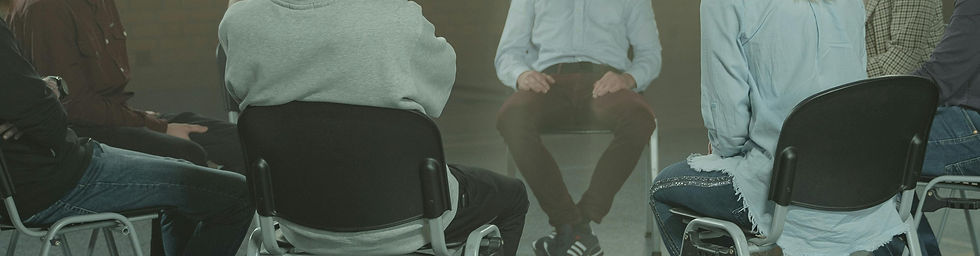
Finding support during or after narcissistic abuse is crucial. Narcissistic abuse support groups can be incredibly validating, and for many survivors, they are the first place where their lived experience is named and believed. Sharing and listening (while surrounded by others who are familiar with the agony of this kind of antagonism) reminds us that we’re not alone, despite our experiences with isolation.
That being said, while support groups have their place, they aren’t a substitute for therapy, and it’s important to gently and honestly name their limits. Support groups and therapy serve very different purposes, and confusing one for the other can sometimes substantially slow recovery. So what are the limitations? Let’s take a look.
Narcissistic Abuse Follows Patterns, But Every Story Is Unique
While many cases involving narcissism share a similar flavor, no two high-stress experiences are the same. Yes, narcissistic abuse includes some consistent, recognizable tactics like idealization, devaluation, minimizing, gaslighting, and other kinds of coercive control. What’s important to recognize, though, is that the relational dynamic behind each situation is different. Your nervous system, attachment history, and trauma responses shape your experience in a way that no group template can fully capture. Recovery shouldn’t just be about fitting into a shared narrative or examining a diluted definition. It’s important to thoroughly understand your own before introducing strangers into your emotional experience.
Relational Safety Is Essential for Trauma Healing
Trauma recovery always requires emotional containment, corrective relationships, and proper attunement. Support groups can offer connection and community, but they aren’t often designed to hold your unique pacing needs, your trauma history, and your attachment needs. Therapy creates a stable and relational environment where your nervous system can slowly learn (and trust) safety again. Groups often can’t provide that depth of containment, regardless of who is running the meetings. The environment simply isn't built for it.
Narcissistic Abuse Support Groups Are Not a Replacement for Trauma Processing
Narcissistic abuse is trauma. More specifically, it is a severe form of relational trauma. This type of trauma doesn’t just live in conscious memory, and is additionally encoded in the body and relational expectations. Because of this, it cannot be fully resolved through validation, insight, or connection alone, even though those are essential components of healing.
Bottom-up therapy modalities such as EMDR, Internal Family Systems (IFS), and Coherence Therapy work directly with how traumatic memory is stored and organized in the brain and nervous system. These approaches support memory reconsolidation and nervous system recalibration. In other words, they help the brain update outdated data and restore a sense of internal safety. This is very different from talking about trauma. It is the process of helping the body and brain no longer live inside it.
Support groups normalize experiences, but trauma therapy processes it in a way that is vital. Both can be valuable, but only trauma therapy is structured to create the neurobiological and relational conditions necessary for true trauma integration and long-term nervous system shifts. Support groups can be a powerful complement, but they are not in any way a substitute for trauma treatment. They can, unfortunately, even be harmful and retraumatizing if entertained too soon.
Dysregulation Can Sometimes Create Unintentional Harm
In group spaces, your story must be shared in fragments. You may not get the continuity or depth needed for true integration. Proper processing often requires us to revisit the same themes and slow down WAYYYY down. That level of depth is hard to achieve when space is shared among too many people. Especially when many support spaces naturally attract people who are still in acute pain. That’s not wrong—it’s completely human, but it can lead to things like:
Comparison
Rushing
Interrupting
Competition over “severity”
Invalidation
Gatekeeping
Pressure to conform to one narrative
These dynamics aren’t malicious or intentional. They’re symptoms of unprocessed trauma, but they can quietly undermine relational safety.
We don’t mean to discourage anyone from joining a group. Just be cautious and understand the limitations of each kind of care. They often work best when they complement each other—not when one replaces the other.
The Difference Between Narcissistic Abuse Group Therapy & Narcissistic Abuse Support Groups
It’s also important to distinguish between support groups and group therapy. They are often spoken about interchangeably, but they are not the same.
Group therapy is led by a licensed clinician who is trained to monitor safety, regulate group dynamics, and intervene when interactions become harmful or retraumatizing. This clinical structure matters, especially in trauma work. For that reason, we generally don't recommend support groups that are not facilitated by a licensed professional. While peer-led spaces can feel validating, they lack the training and containment needed to manage dysregulation, unhealthy comparison, or inadvertent harm.
EMDR Therapy, Narcissistic Abuse Therapy, Couples Therapy, Family Therapy & More in Chicago, IL
If you’re looking for narcissistic abuse recovery therapy and EMDR therapy in Chicago or the surrounding suburbs, working with a trauma-informed, narcissism specialist can make all the difference. Learn more about my narcissistic abuse and narcissism-focused services:
Virtual EMDR for Attachment Trauma in Chicago
If you are trying to find EMDR therapy for C-PTSD, or complex trauma in Chicago (or anywhere in Illinois), you’re welcome to reach out. We're happy to help you explore whether Somatic & Attachment-Focused EMDR feels like the right fit for your needs.
Contact Two Lights Therapy Center to learn more about somatic and attachment-focused EMDR therapy and how we can support your recovery.
Want to work with a specialist? Virtual Sessions with Erika can be scheduled by emailing: hello@twolightstherapy.com or by visiting: https://www.twolightstherapy.com/contact
Two Lights Therapy Center PLLC | Chicago, Illinois.
Therapist Specializing in Narcissistic Abuse & High-Conflict Relational Dynamics
Please Note: The information provided in these blog posts is for informational and educational purposes only. It is not intended to be a substitute for professional therapy or therapeutic services. While these blogs are written by licensed psychotherapists, readers should not use this content as a replacement for individualized advice or treatment. If you are experiencing a crisis or need immediate assistance, please call 911 or contact other emergency services in your area.


